It was late January 2026, there was still some snow on the ground. My wife and I made a quick check-up visit to Bellevue. Good thing we came, because our bees had had a visitor. A woodpecker.
In summer the woodpecker isn’t an issue - there are plenty of insects in the forest. But in winter, when snow covers the ground and food gets scarce, the situation changes. The woodpecker knows exactly that behind the hive wall sits a warm, densely packed store of protein - the bees’ winter cluster. The bees heat each other using their wing muscles. At the center of the cluster sits the queen, at around 30°C. At the edge it’s only about 13°C, and the bees keep rotating places - spending time out in the cold at the edge, then warming back up in the center. Much like penguins in Antarctica.
The woodpecker has one specialty: it hammers holes into wood. At both colonies at the apiary it pecked a few small holes - and then one huge one, big enough for it to fit through itself. The problem for the bees, even once they drive the woodpecker off, is the damage. It’s not just a bit drafty - it’s as if someone had thrown open every door and window in the middle of winter. The winter cluster risks cooling down, and in the worst case you lose the colony - not to disease or varroa, but to a bird.
A few glimpses of the damage - from the overview to the close-up:
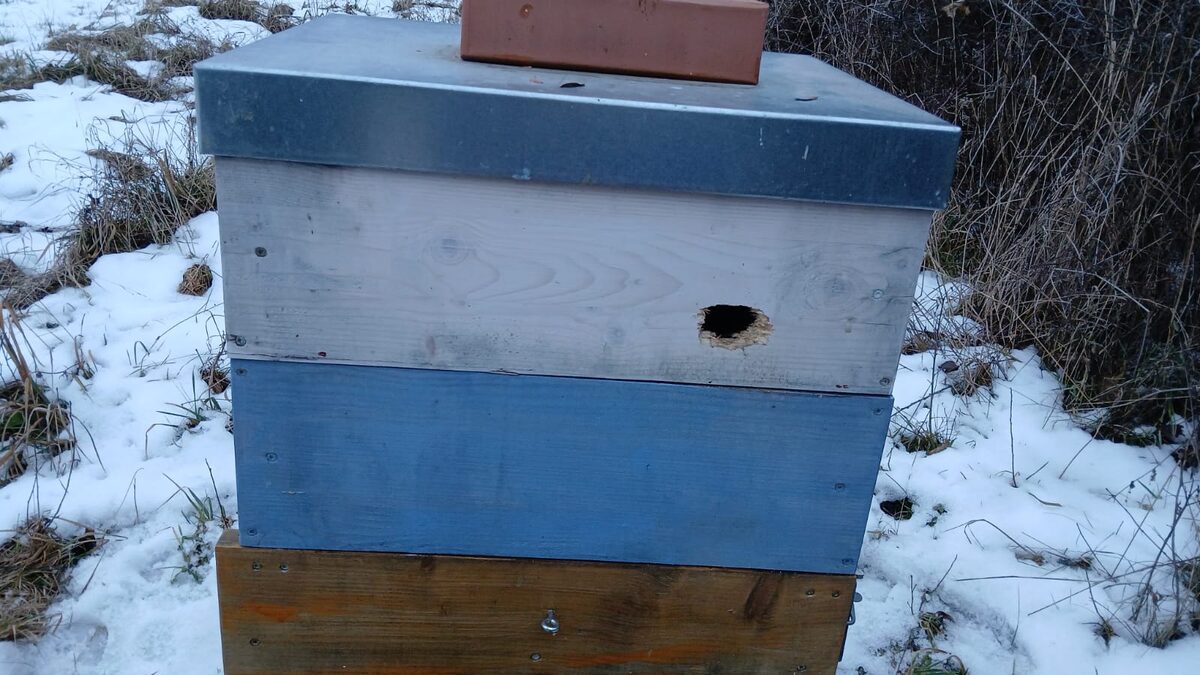
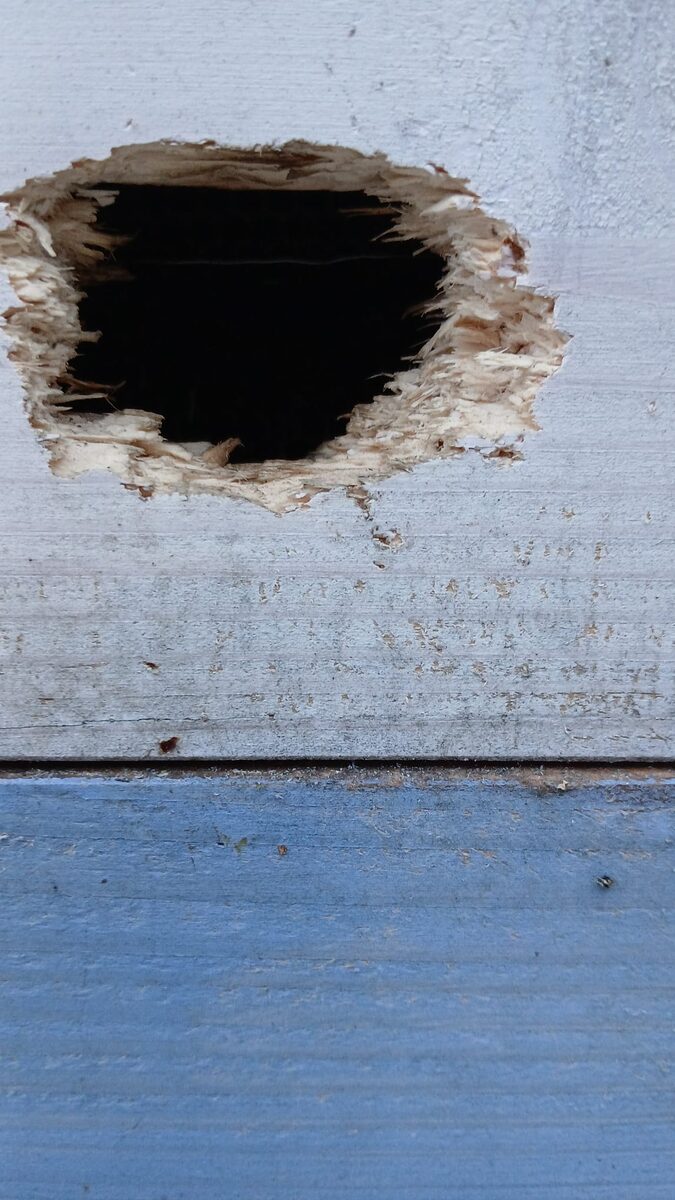
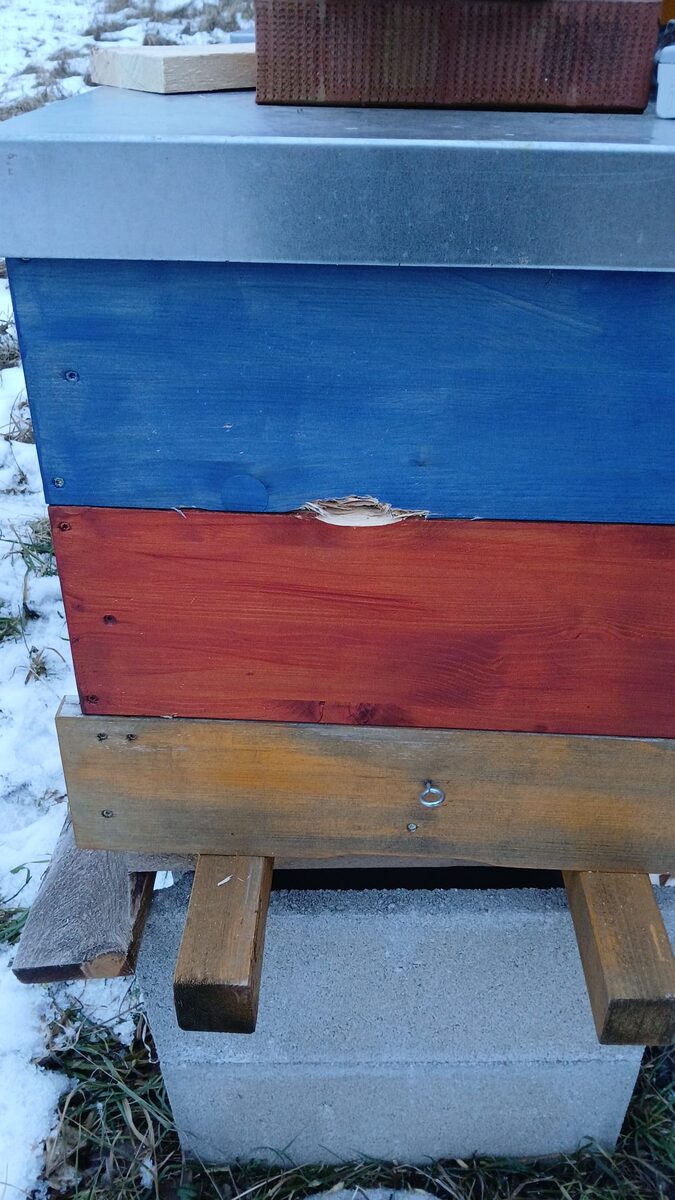
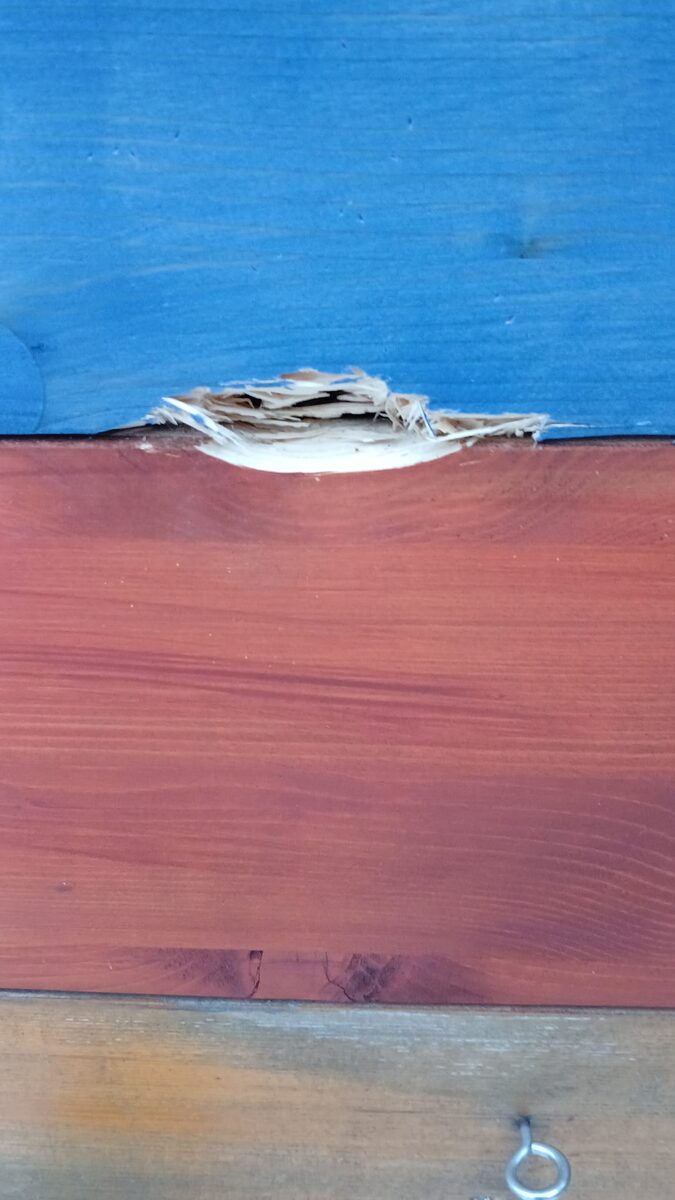
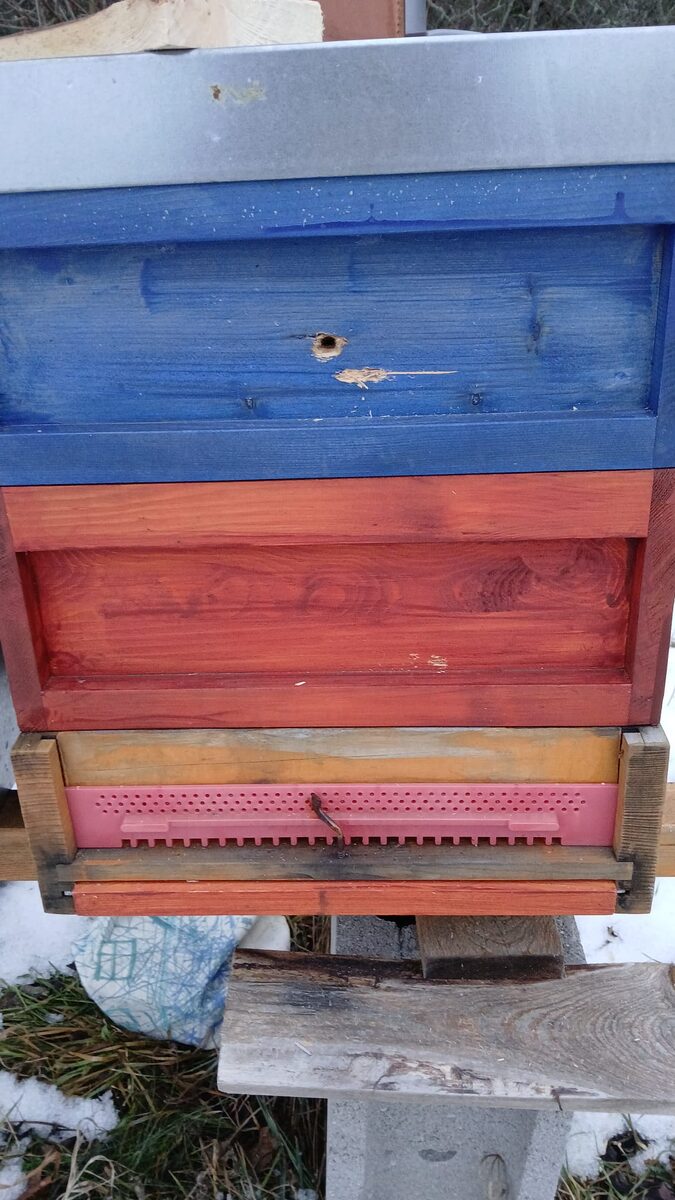
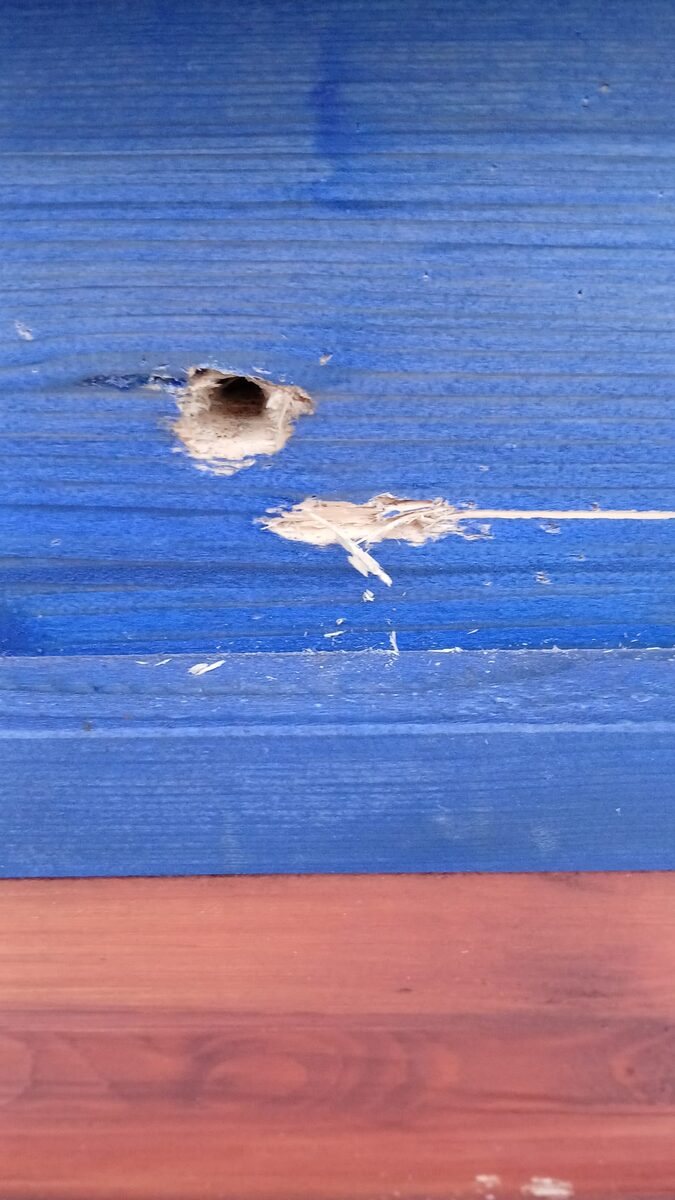
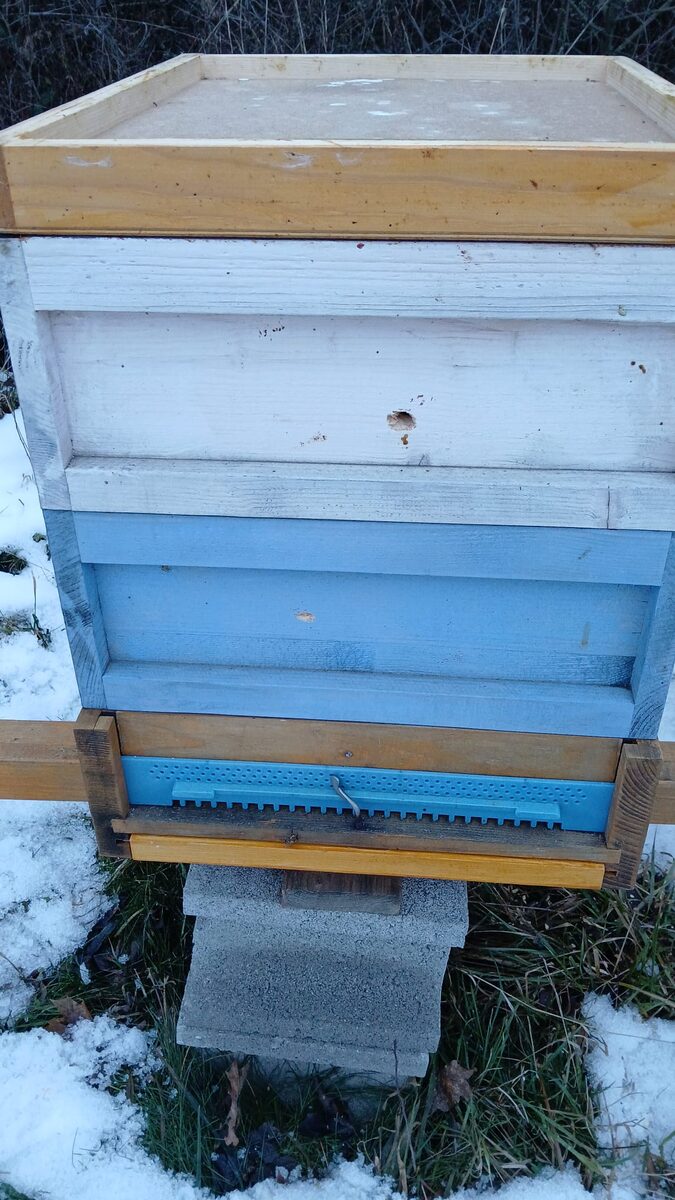
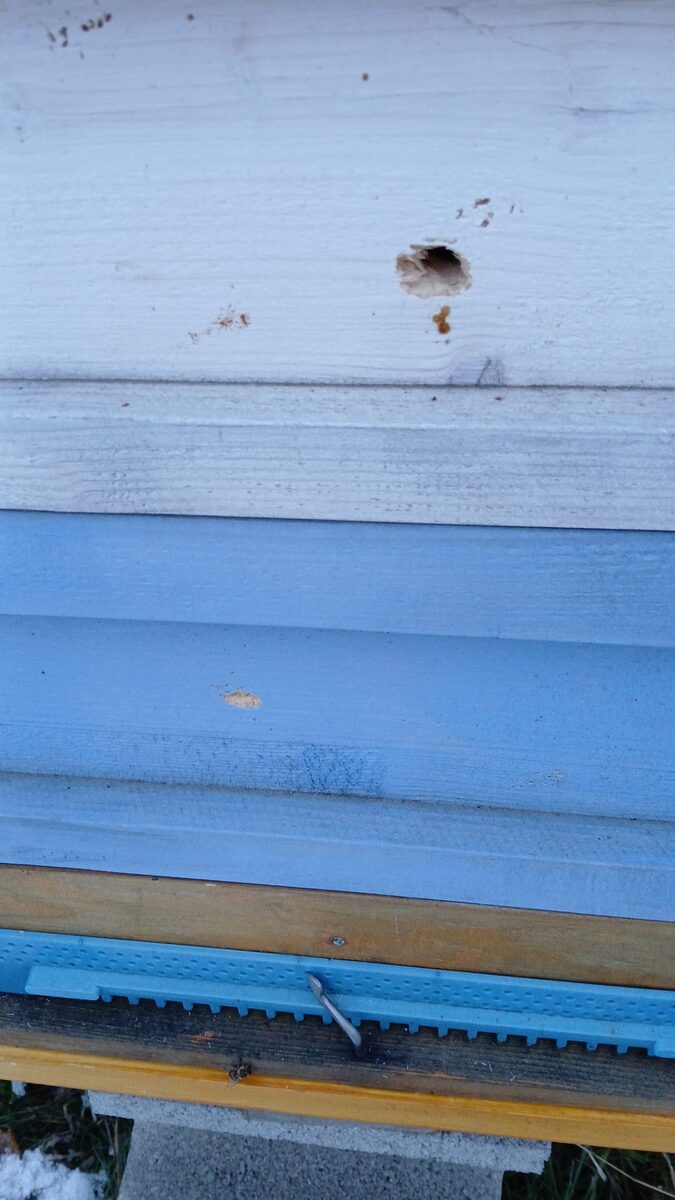
The most urgent thing was to at least provisionally seal the holes. With a couple of wooden boards and the cordless screwdriver that was done quickly. Then a very brief look inside the hive: is the woodpecker still in there? If so, it would be trapped now! Luckily, it was already gone.
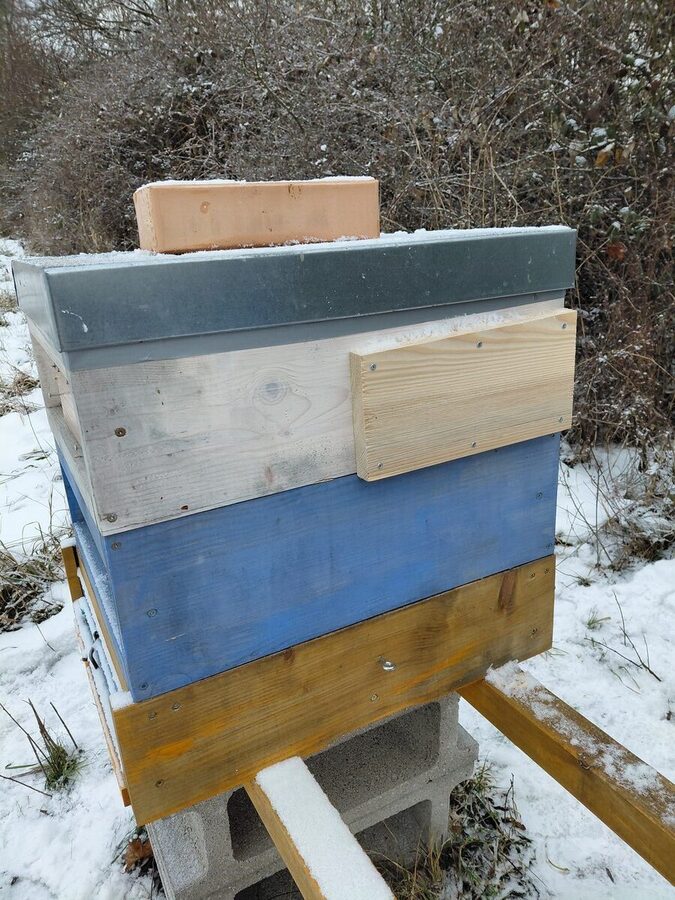
A few weeks later, during the spring inspection, I came back to the apiary with fresh boxes and moved the frames over - now I could take the perforated boxes away for a proper repair. I straightened the edges of the large hole, then glued in a piece of wood cut to fit. I filled the small holes with a special water-based wood filler. Finally I sanded everything down once more and restored the wood protection with the Auro natural paints popular in organic beekeeping.
For next winter I’m still thinking about adding some woodpecker protection to the hives…